EXTENSION CORD
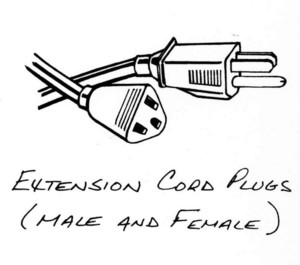
Description: This comes flat or round and in various colors -- white, brown, yellow, orange, and blue -- with two or three wires and with a two- or three-prong plug at one end and a tap at the other. It is available from 6 feet to 100 feet long.
Buying information: Here, again, match the amperage of the device to the cord; the cord should be heavy enough to take the current drawn by the device. If grounding is required, the cord should be grounded (three-wire type).
Colors are standard throughout the industry and indicate the strength of the cord. Flat brown and white extension cords are used in the household for lamps and other light uses. Flat yellow can be used for outdoor power tools and the like, but the wire is not as well protected or insulated as the round orange ones made of rubber. The orange (so the cord can be seen) is the best choice for hedge clippers and the like, or for using safely outdoors, because of its durability and visibility.
You can also get extension cords in blue -- this is the Cadillac of the breed, in that it is able to withstand extremes in temperature and is the most heavy duty. Most people reserve these for marine use. Whatever the color, be sure the cord you choose is UL approved.
Cords can be found that stay flexible down to 58 degrees below zero Fahrenheit. Cords are also available that will resist oil and acid.
Description of Contents
 IntroductionBoxesCircuit BreakersConduitCord Sets FusesLamp PartsLight FixturesPlugsReceptaclesSwitchesTapsWall PlatesWire
OTHER HARDWARE SECTIONS
GENERAL HARDWARE SECTIONPLUMBINGADHESIVES, PATCHES & MORESAFETY