CONDUIT INTRODUCTION
In general, conduit is a hollow tube or pipe that comes in various forms and materials and through which insulated electrical wire is run.
There are limits to how many wires may be pulled through conduit, depending on the diameter of the pipe and the wire sizes. The thicker the wire, the fewer wires are allowed. Check with your local building department to find out how many wires are permitted in a given size of conduit.
THIN-WALL (EMT) CONDUIT
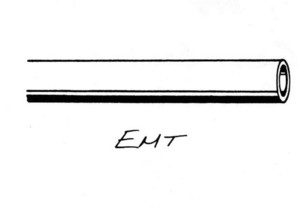
Description: This thin-walled pipe, also called EMT (for electric metallic tubing), comes in an internal diameter of 1/2 inch to 4 inches and even larger, and in l0-foot lengths. The 1/2-inch diameter is most commonly used.
Buying information: EMT is normally used inside the house, such as along a garage wall or in basement workshop wiring. It is not practical to install the material inside existing walls, because they must be opened up to do so. It is secured to boxes with EMT connectors -- formed metal pieces held together by pairs of screws.
How-to hints: EMT should not be buried in the ground or exposed where it can be struck, such as by a lawn mower. Thin-wall is often used outside, but we do not feel it is made for this (its walls are only 1/16 inch thick).
Thin-wall can be bent easily with a device called a hickey and cut with a hacksaw. It can be mounted on walls securely with straps (see later section).
A variety of fittings are available that allow EMT to make turns without having to bend it, and they are secured with EMT connectors.
Description of Contents
 IntroductionBoxesCircuit BreakersConduitCord Sets FusesLamp PartsLight FixturesPlugsReceptaclesSwitchesTapsWall PlatesWire
OTHER HARDWARE SECTIONS
GENERAL HARDWARE SECTIONPLUMBINGADHESIVES, PATCHES & MORESAFETY